
Siemens Healthineers
Duration
Mar 2025-Aug 2025
Location
Shanghai
Task
Service Design
System UX
Design Strategy
Redesigning Human–Machine Collaboration in the Surgical Room
During my internship at Siemens Healthineers, I worked on improving the workflow of CT-guided interventional procedures such as lung biopsies. These procedures require radiologists and technicians to coordinate imaging, positioning, and decision-making in time-critical, sterile environments.
Rather than treating usability issues as isolated interface problems, I approached CT-guided intervention as a tightly coupled clinical service spanning multiple stages, roles, and systems.
Background & Motivation
How might we reduce workflow friction and improve system visibility across the CT-guided intervention journey?
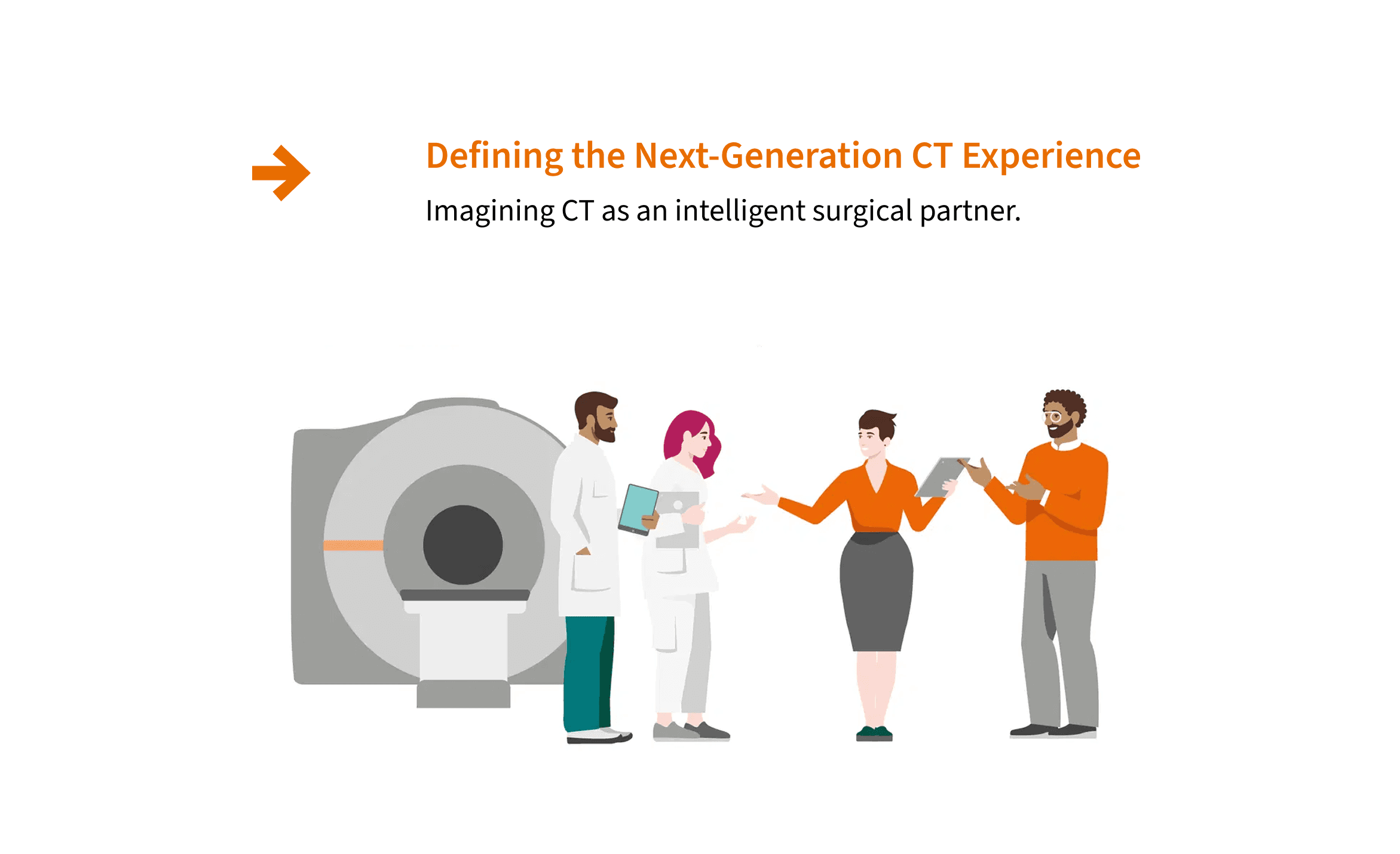
Our work focused on a specific scenario: CT-guided interventional surgery, where the CT scanner is used multiple times throughout a procedure. In such time-critical environments, coordination between clinicians, devices, and information systems becomes highly complex.
Research Methods I Used
Cross-method Primary & Secondary User Experience Research
Mix-method Research
Understanding real clinical workflows through field observations, interviews, and contextual analysis.
Cross-stakeholder Ideation
Collaborating with clinicians, engineers, and designers to translate insights into system-level opportunities.
ROI-driven Evaluation
Assessing proposed solutions based on workflow efficiency, cognitive load reduction, and clinical impact.
UI Design & Prototyping
Fast UX meets strong visual impact
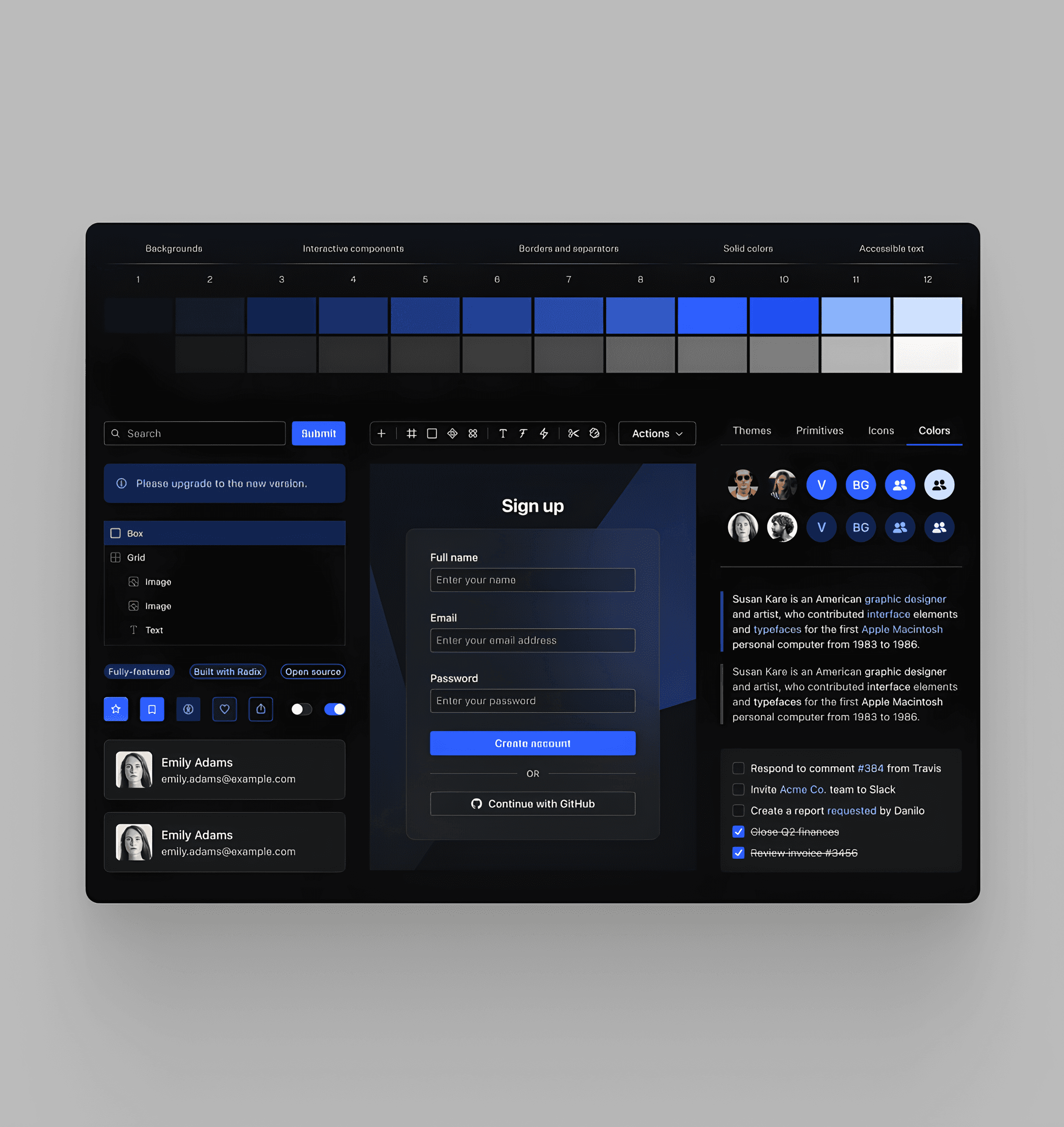
We created a high-fidelity prototype in Figma with clear layout rules and scalable components. The design system was built for responsiveness and performance — with light, compressed assets and clean CSS handoff for devs. We also tested CTA placements and content scanability through quick feedback rounds.
Design Process
Mix-method Research
CT procedures suffer from fragmented coordination under time pressure
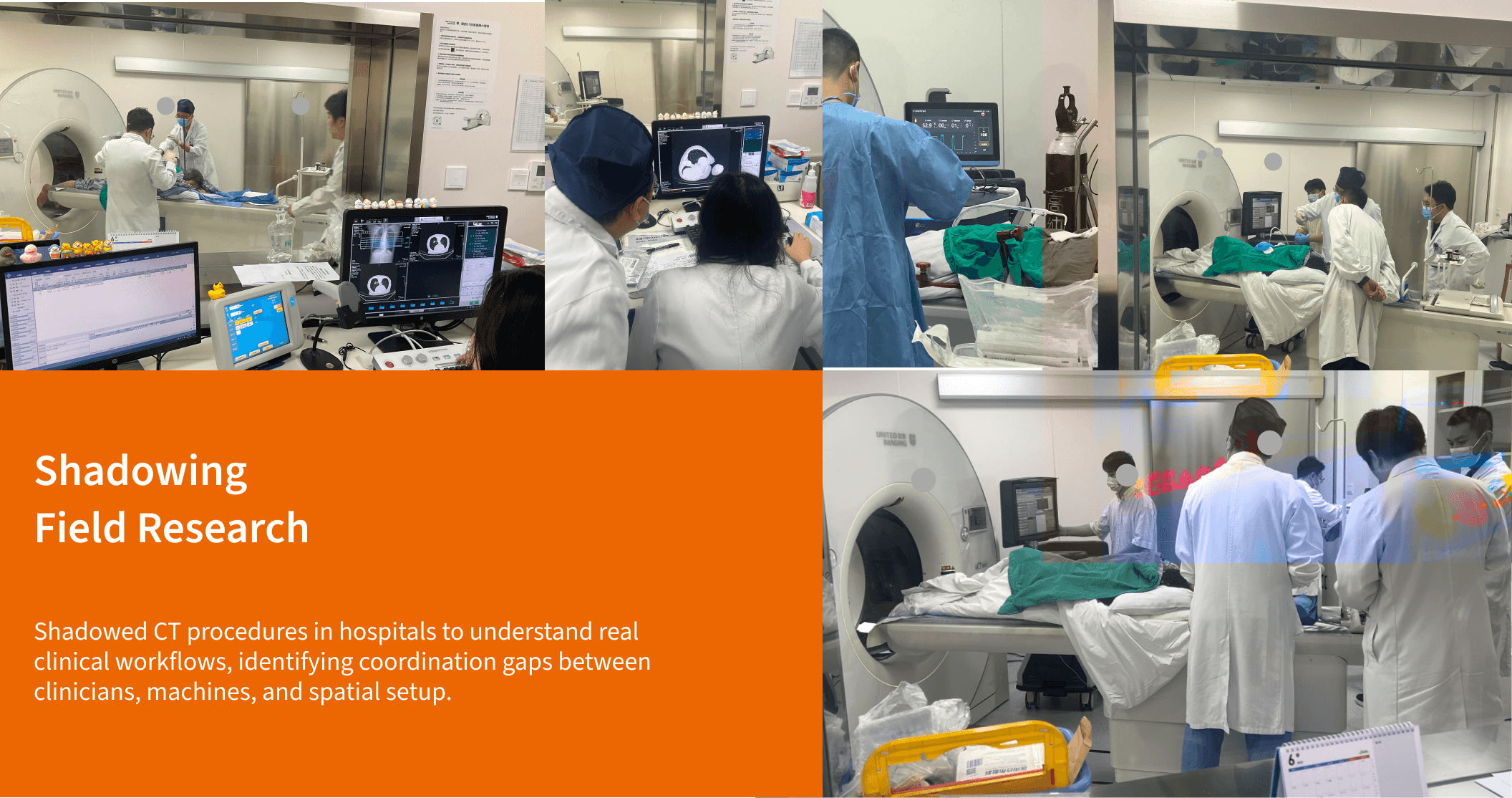
Observed real CT procedures in hospital environments, shadowing radiologists and technicians to understand how imaging workflows unfold under time pressure. These observations revealed hidden coordination challenges between human actions, machine states, and spatial constraints in the scanning room.
Cross-stakeholder Ideation
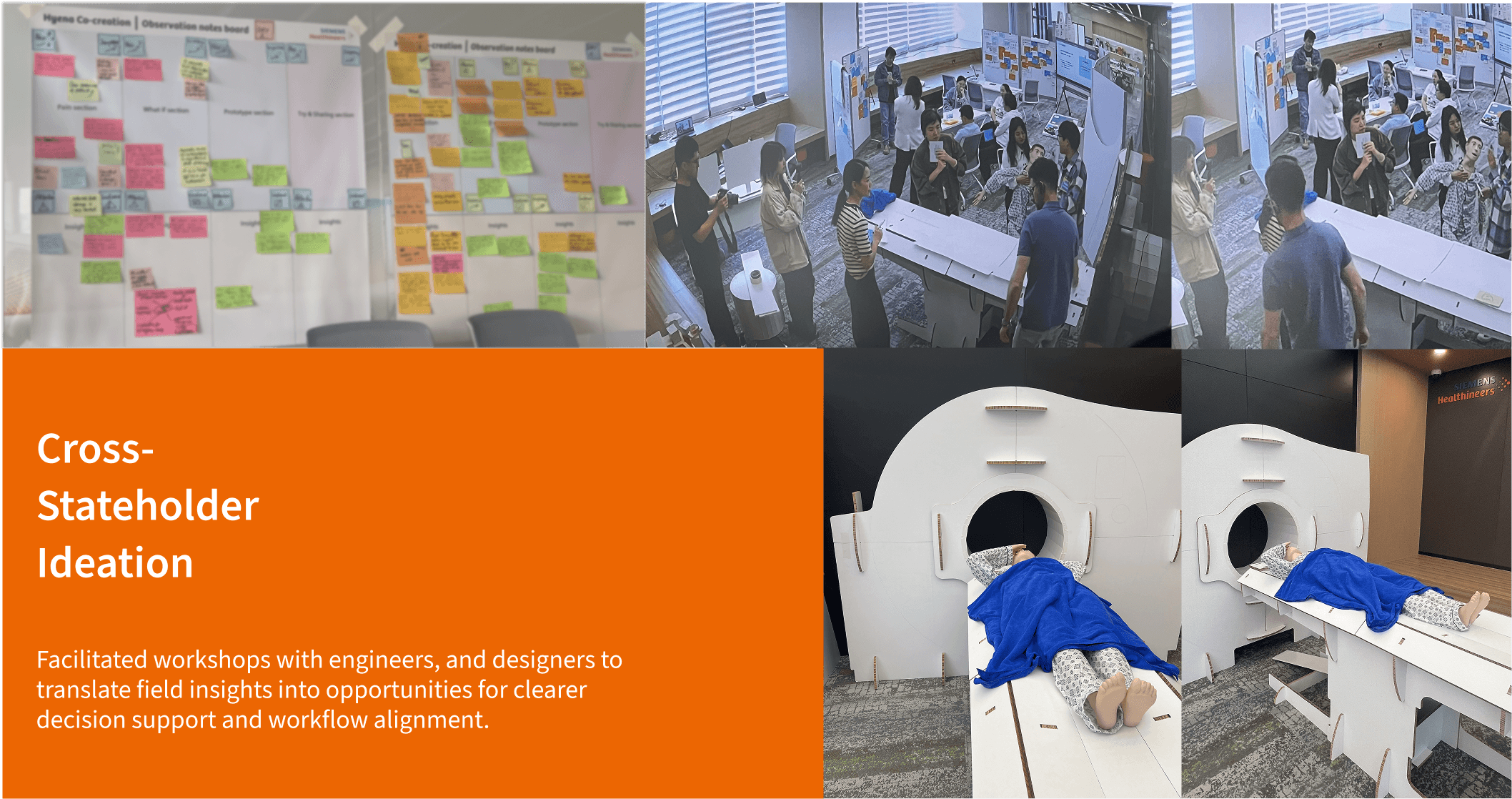
Ideation focused on making CT workflow states visible and actionable
Facilitated collaborative workshops with clinicians, engineers, and designers to translate field insights into opportunity areas. Mapping pain points across roles helped identify where decision support, system visibility, and workflow alignment could reduce cognitive load during procedures.
ROI-driven Evaluation
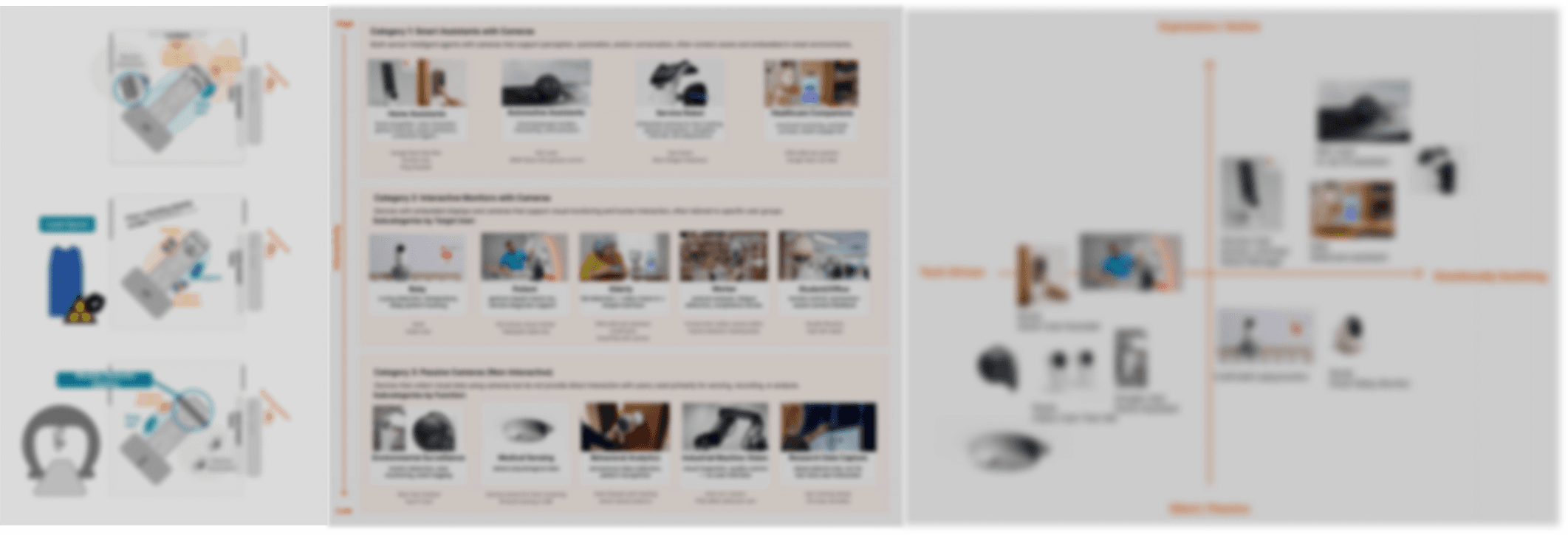
Introduces ambient intelligence to moderate the workflow
Reframed the CT workflow as a coordinated human–machine system. The redesign focused on improving procedural visibility, supporting critical decisions, and simplifying complex setup steps to enable smoother collaboration between clinicians and imaging systems.
Takeaways
Takeaway 1
Cross-stakeholder alignment is critical in healthcare innovation
Design ideas must balance clinical needs, engineering feasibility, and operational constraints to move toward real implementation.
Takeaway 2
Designing for clinical environments requires understanding workflow, not just interfaces
Effective solutions come from observing how clinicians coordinate people, machines, and spatial constraints under time pressure.